Damp investigation
Look at the affected area, wall construction and relevant internal and external details to identify the likely source.
See how we check it →Damp, mould and condensation can look similar but need different solutions. We inspect the likely source, explain what we find and recommend practical next steps for your home.
We work across damp investigation and practical repairs. The first job is to understand what is happening in this property, not to assume a standard treatment fits every wall.
Look at the affected area, wall construction and relevant internal and external details to identify the likely source.
See how we check it →Review cold surfaces, moisture, room use and ventilation, then discuss practical steps to reduce the conditions that support mould.
Explore condensation help →Check likely entry points such as rainwater goods, roof details, pointing, render, openings and raised ground levels.
About water ingress →For suitable walls without a cavity, thin internal insulation can improve the thermal performance with a slim skimmed finish.
See the insulation system →Check for possible bridging, leaks and other explanations before discussing whether a damp-proof course treatment is appropriate.
Read about DPC checks →Once the source is addressed, we can discuss removal of damaged finishes, replastering and preparation for decoration.
Ask about your wall →Choose a focused or extended paid written assessment, with scope and fee confirmed before booking. It is not a lender survey or expert-witness report.
View report options →Injection or tanking can be suitable in some situations. They are not a universal answer. We look for visible defects and moisture patterns first, and explain when more investigation is needed.
Our investigation process →We’ll talk through the problem before proposing work, so you know what has been observed and what the recommendation is based on.
Where it is, when it appears, and whether it changes with rain, heating or ventilation.
We assess the affected area and relevant building details, inside and outside where accessible.
We set out the likely cause, what is uncertain and whether further checks are worthwhile.
We quote for appropriate repairs and finishes, with the scope explained before work begins.
Permagard ISO-THERM is a thin internal wall insulation system that can be fitted to suitable walls and plaster skimmed. It may suit a cold solid wall where there is no cavity to insulate.
It does not solve every damp or mould issue. We first consider whether there is an external water defect or another source that needs attention.
How the system works →Medway is our core area, with suitable jobs taken across Kent. Explore Swale, Gravesham and North Kent, West Kent, East Kent and Thanet, or call to confirm your postcode and availability.
Only if the inspection findings support it. Low-level damp can have other causes, so we consider the evidence before discussing a DPC treatment.
No. Some defects are intermittent or hidden. If we cannot confirm the source on the first visit, we will explain what we have found and what checks could help.
It can make a suitable cold wall warmer and may reduce condensation risk there. It will not resolve leaks, rain entry or every ventilation problem.
Our local pages cover Gillingham, Chatham, Strood, Rochester, Rainham, Sittingbourne and Sheerness. We also cover Swale, Gravesham, North Kent, West Kent, East Kent and Thanet, subject to postcode and availability.
These photos show examples of visible mould, damaged finishes, temperature differences, external details and checks. A photo or meter reading alone cannot prove the cause; we consider the property and the evidence together.
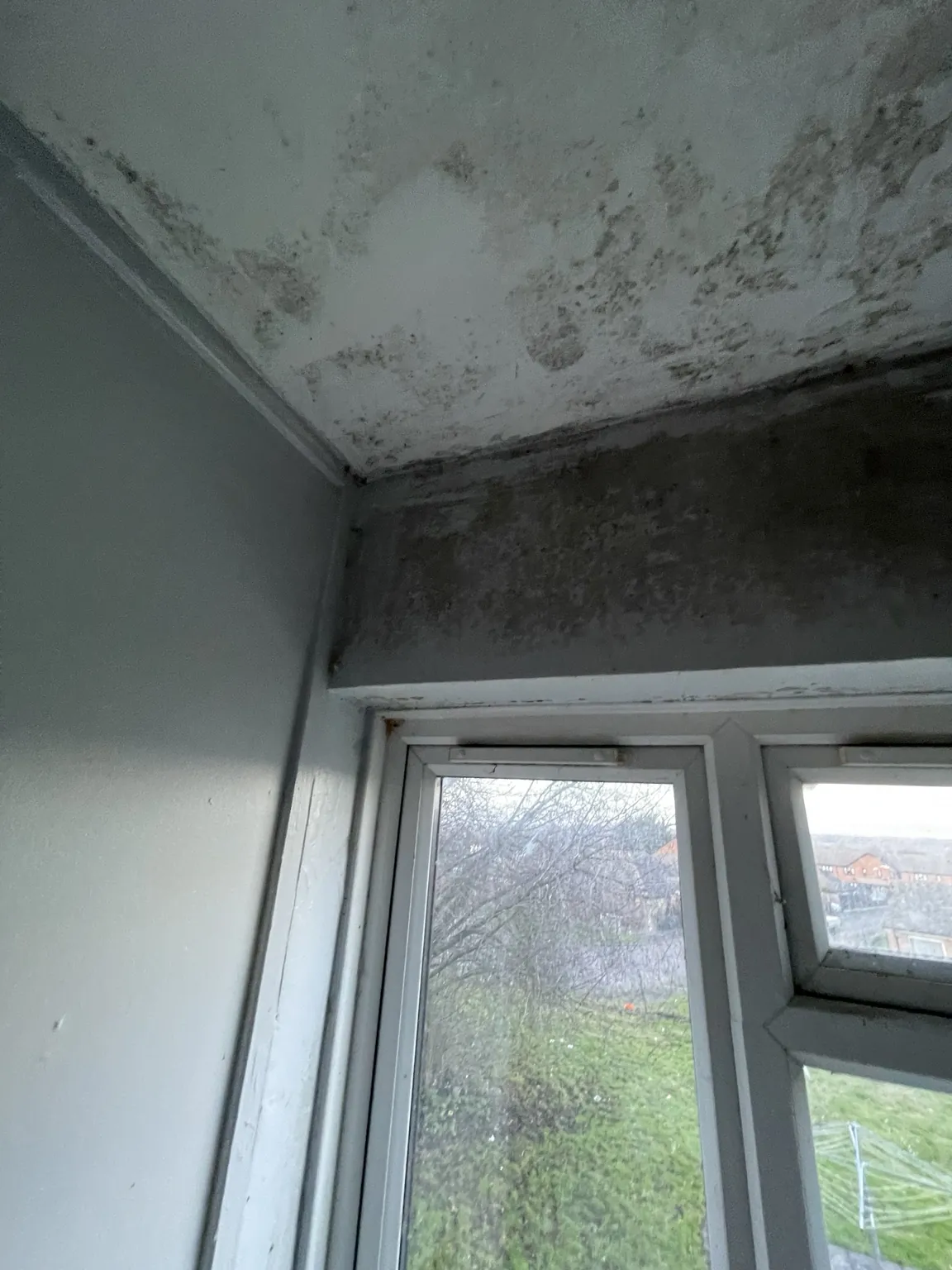
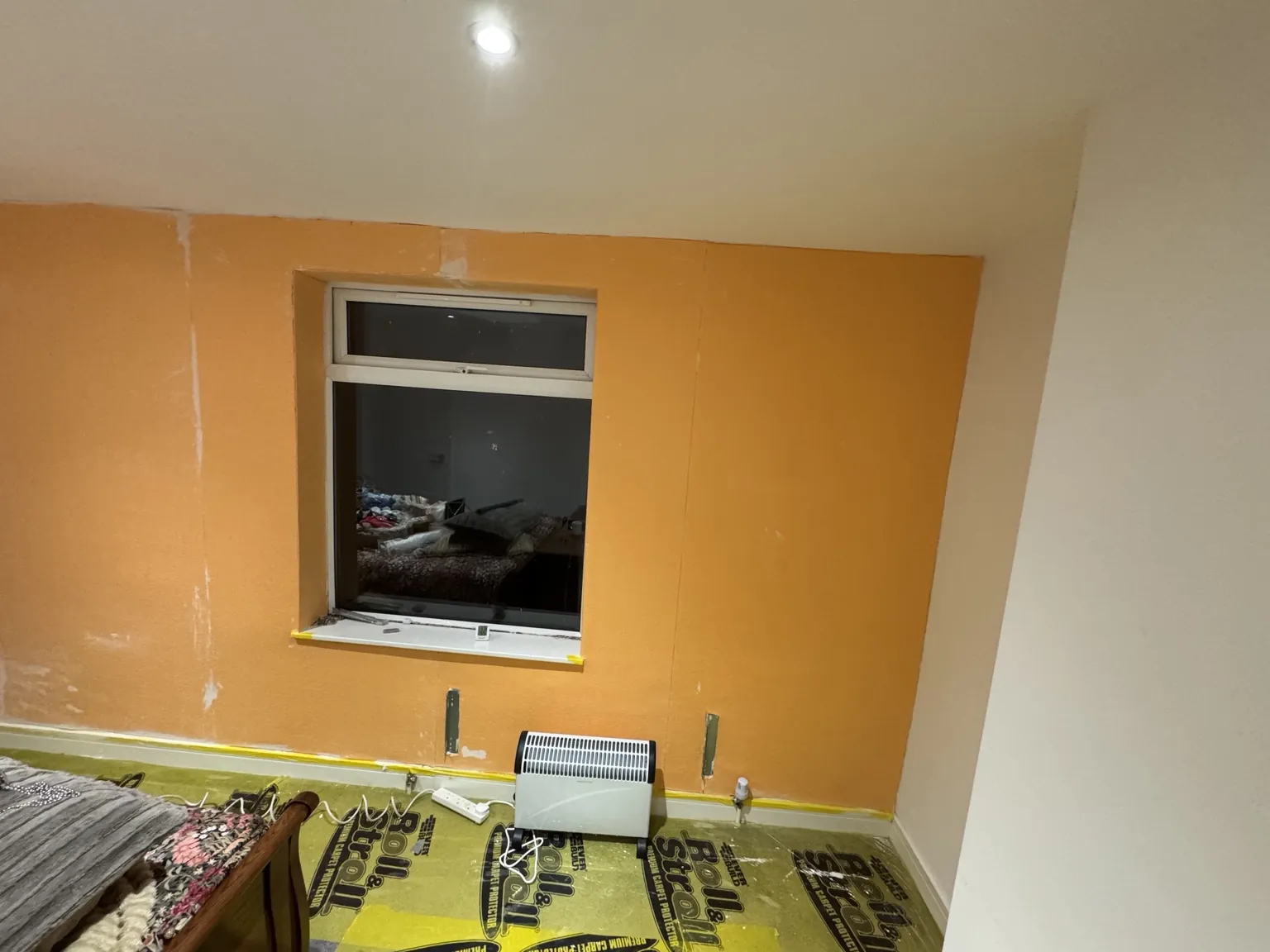
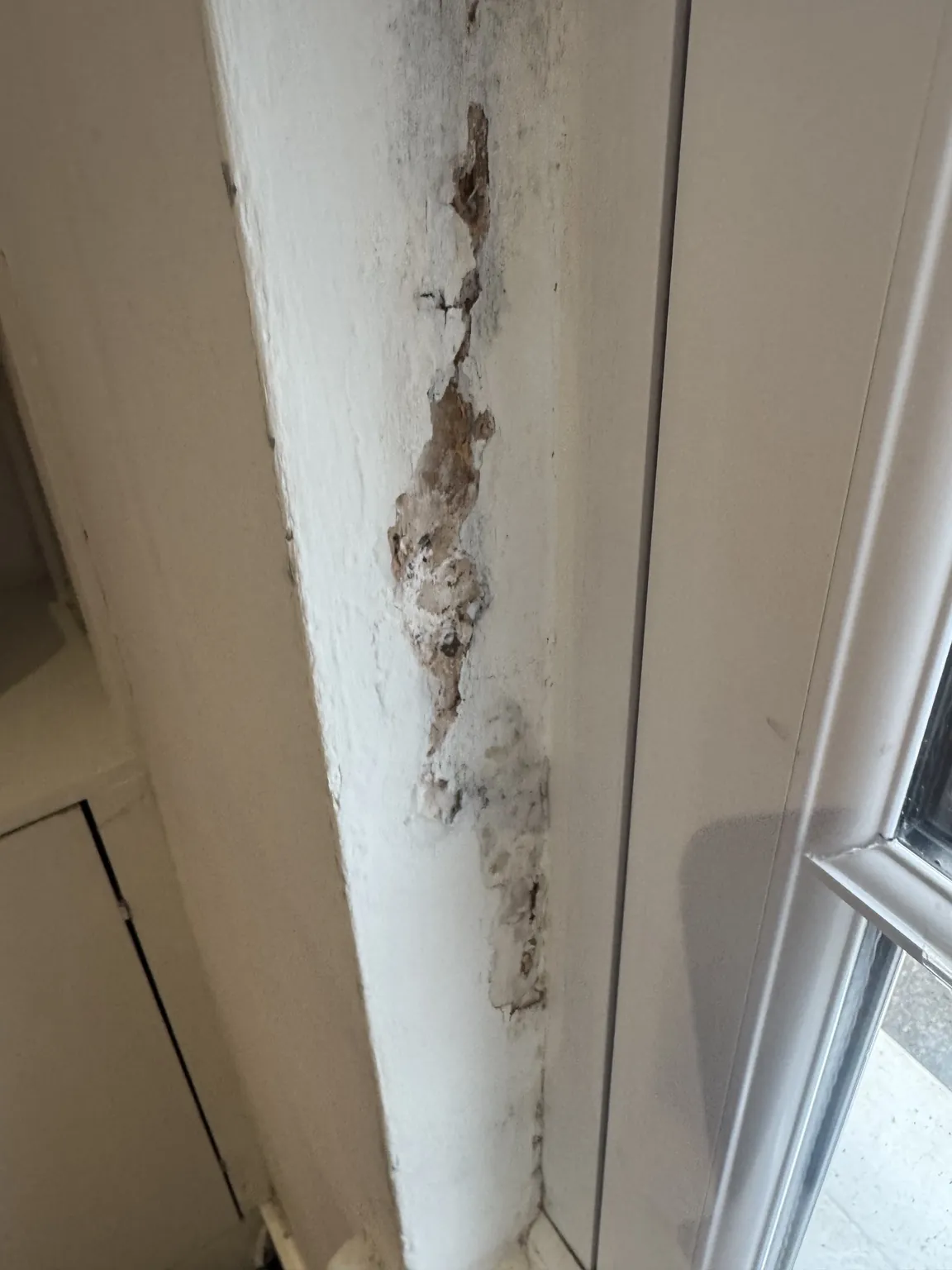
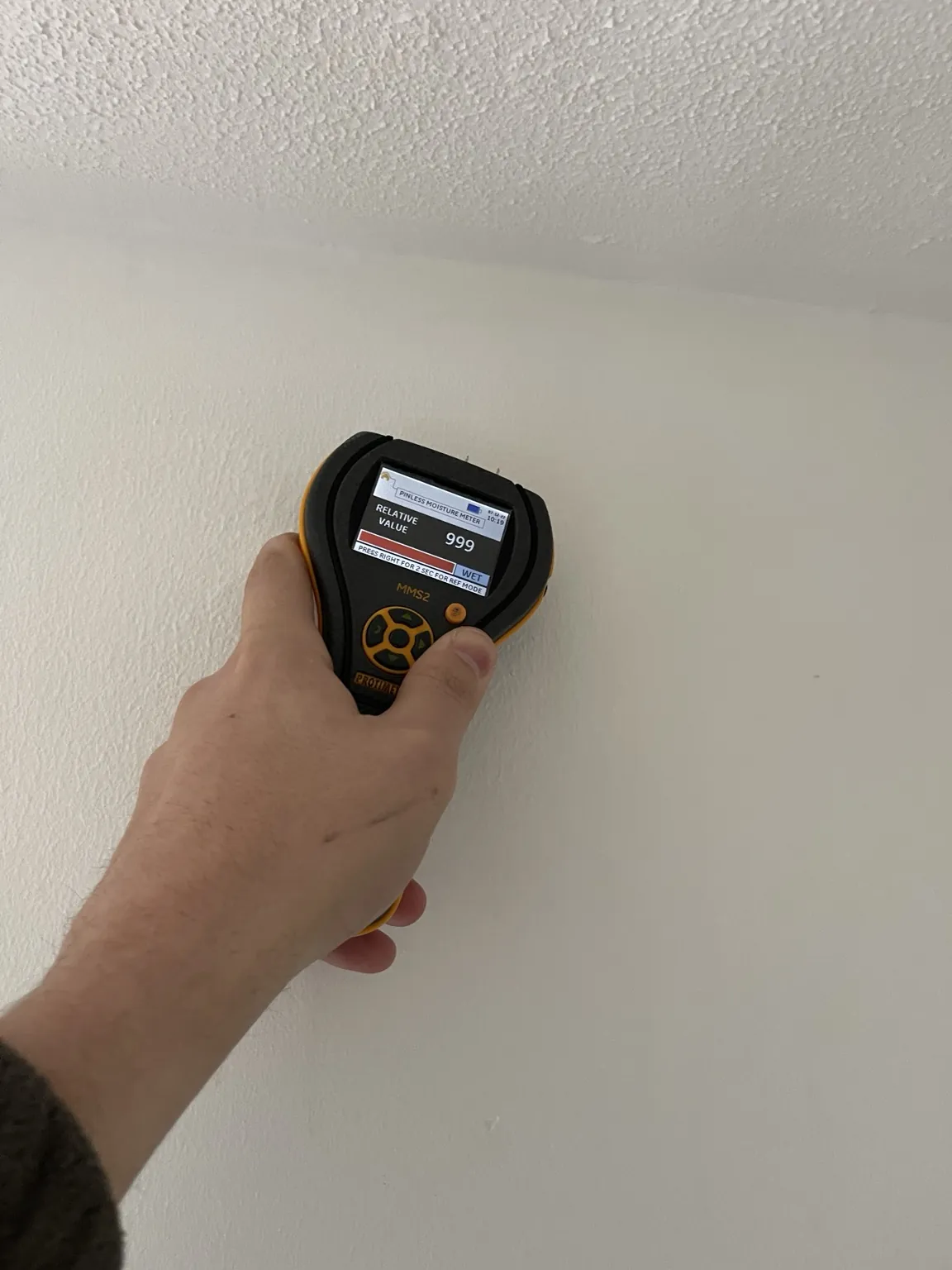
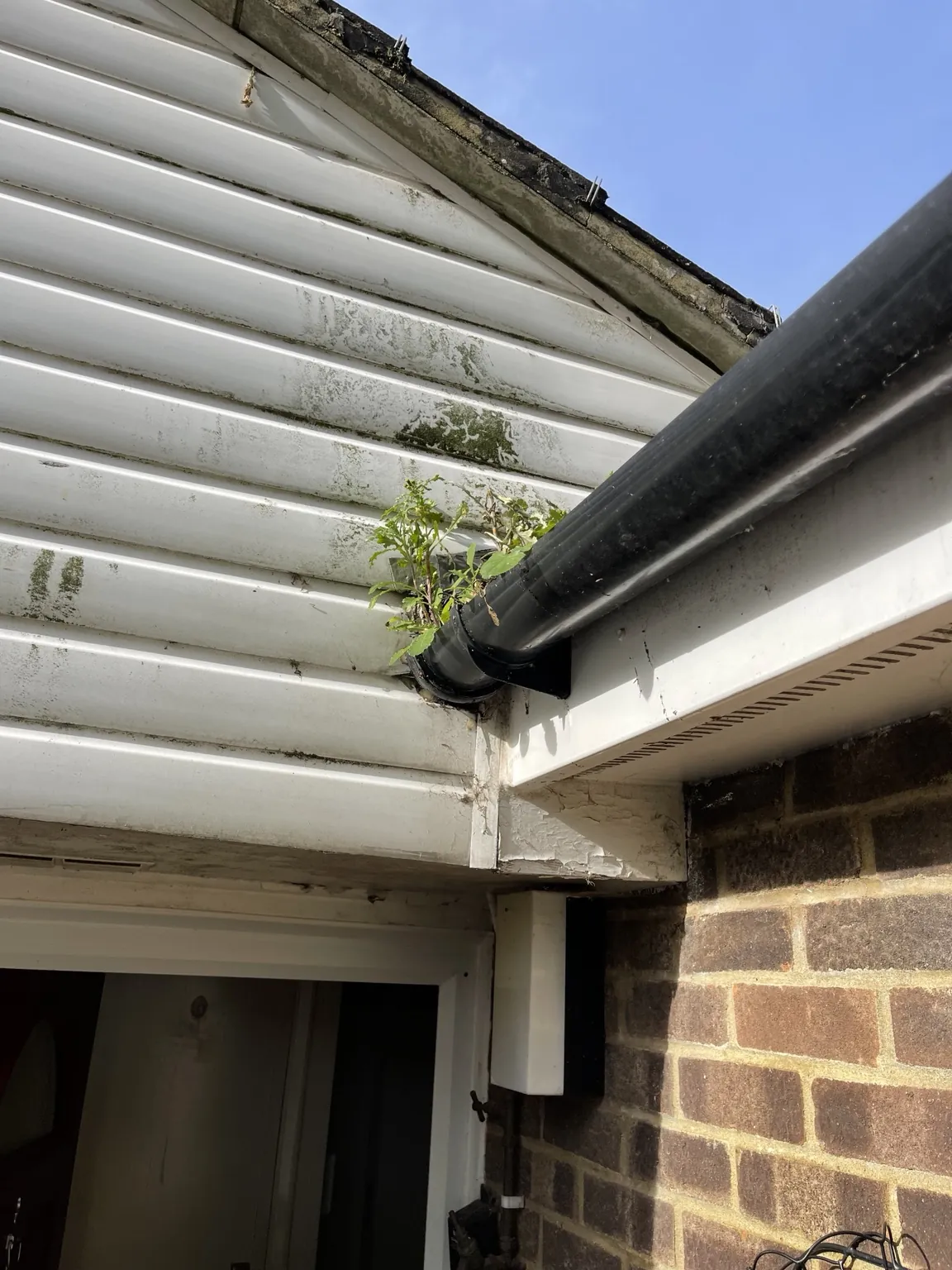
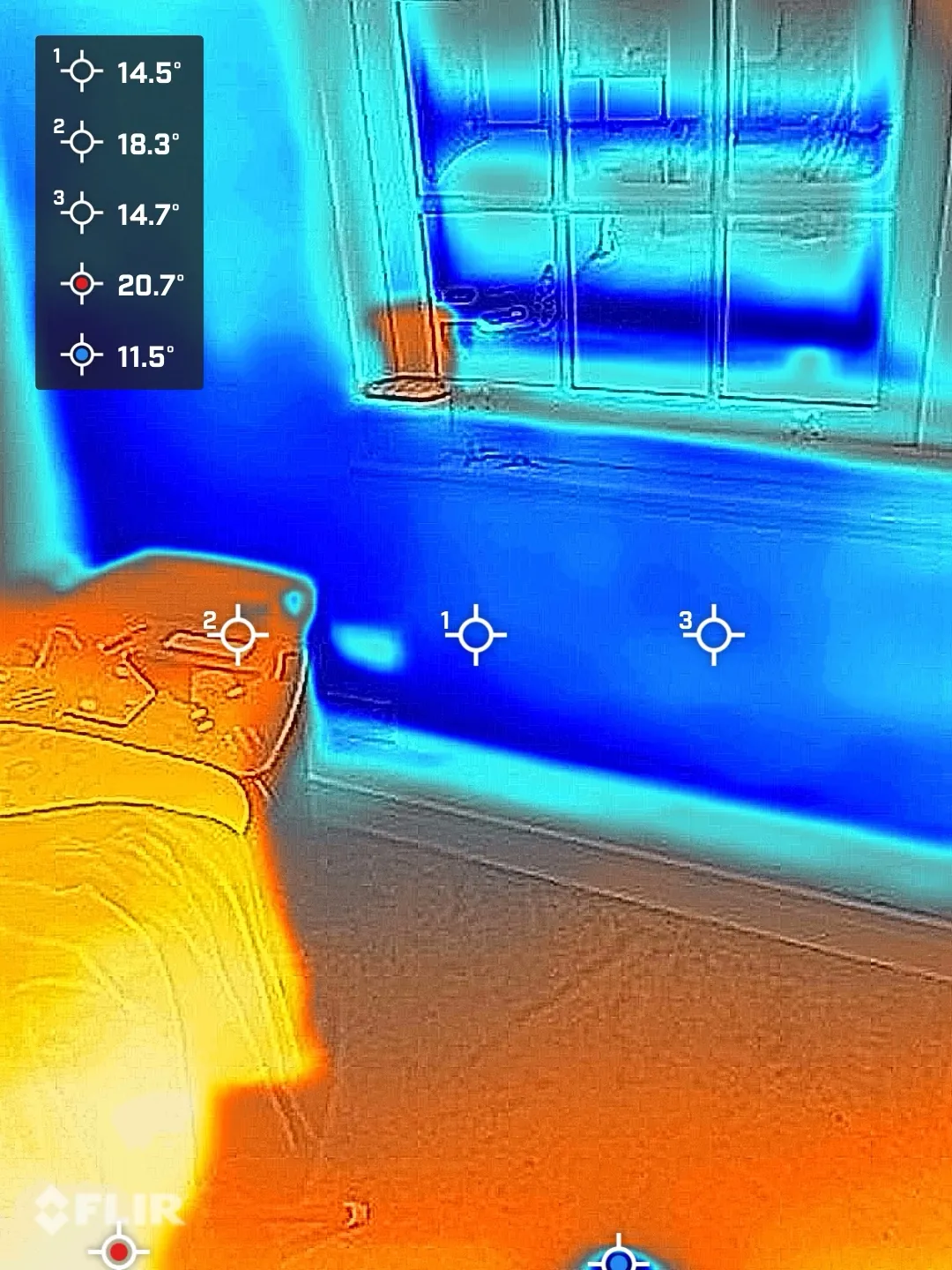
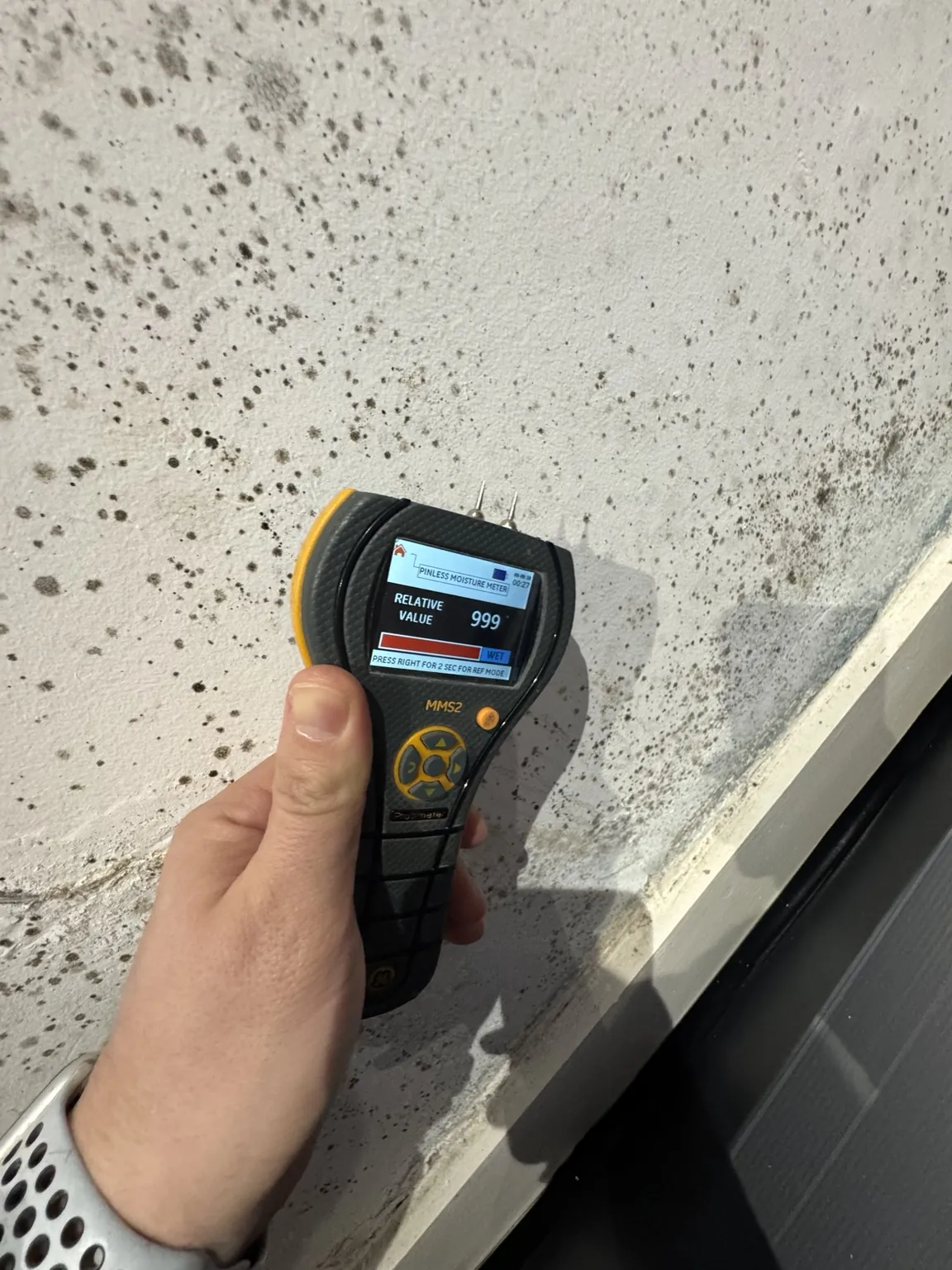
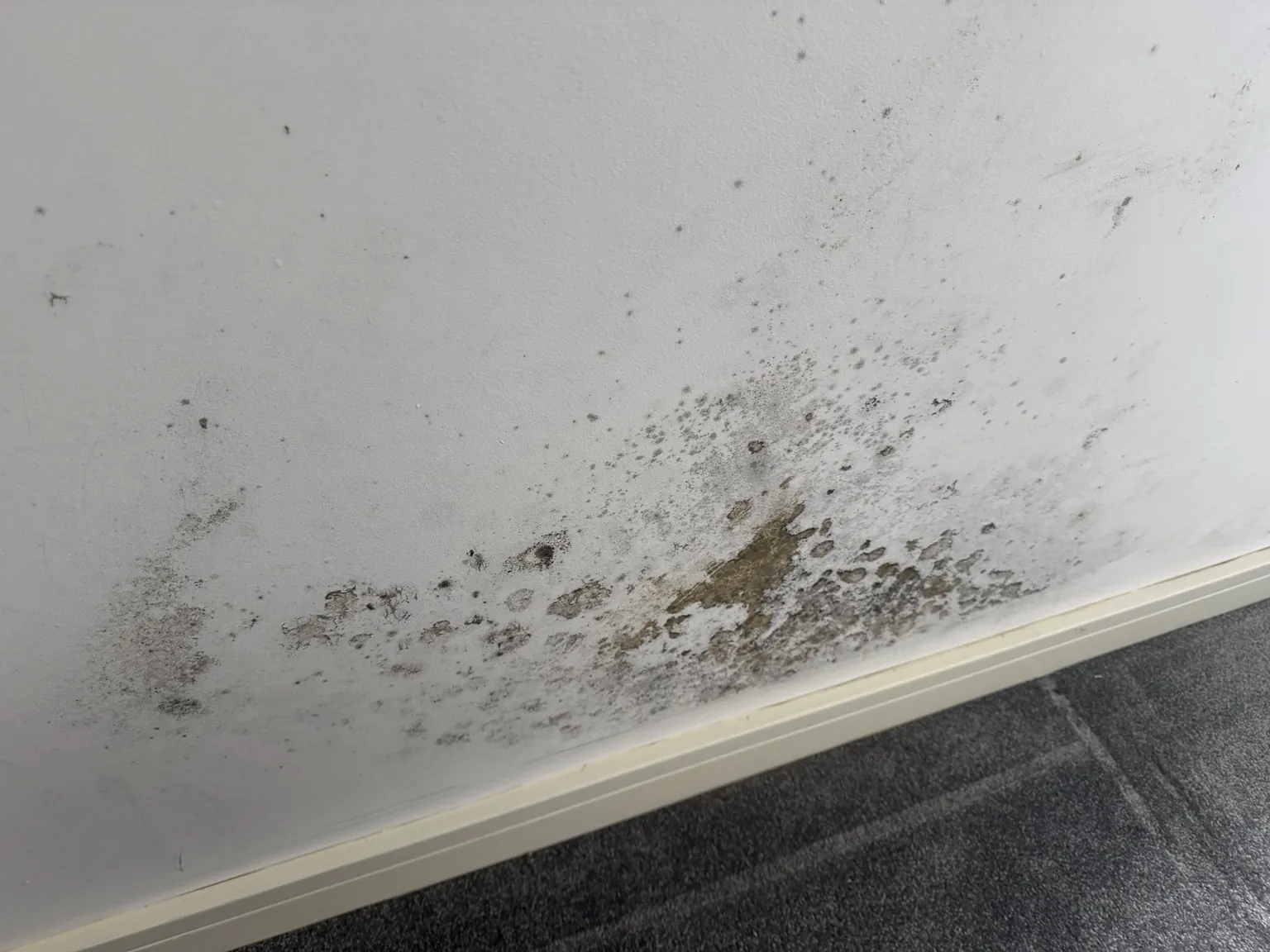
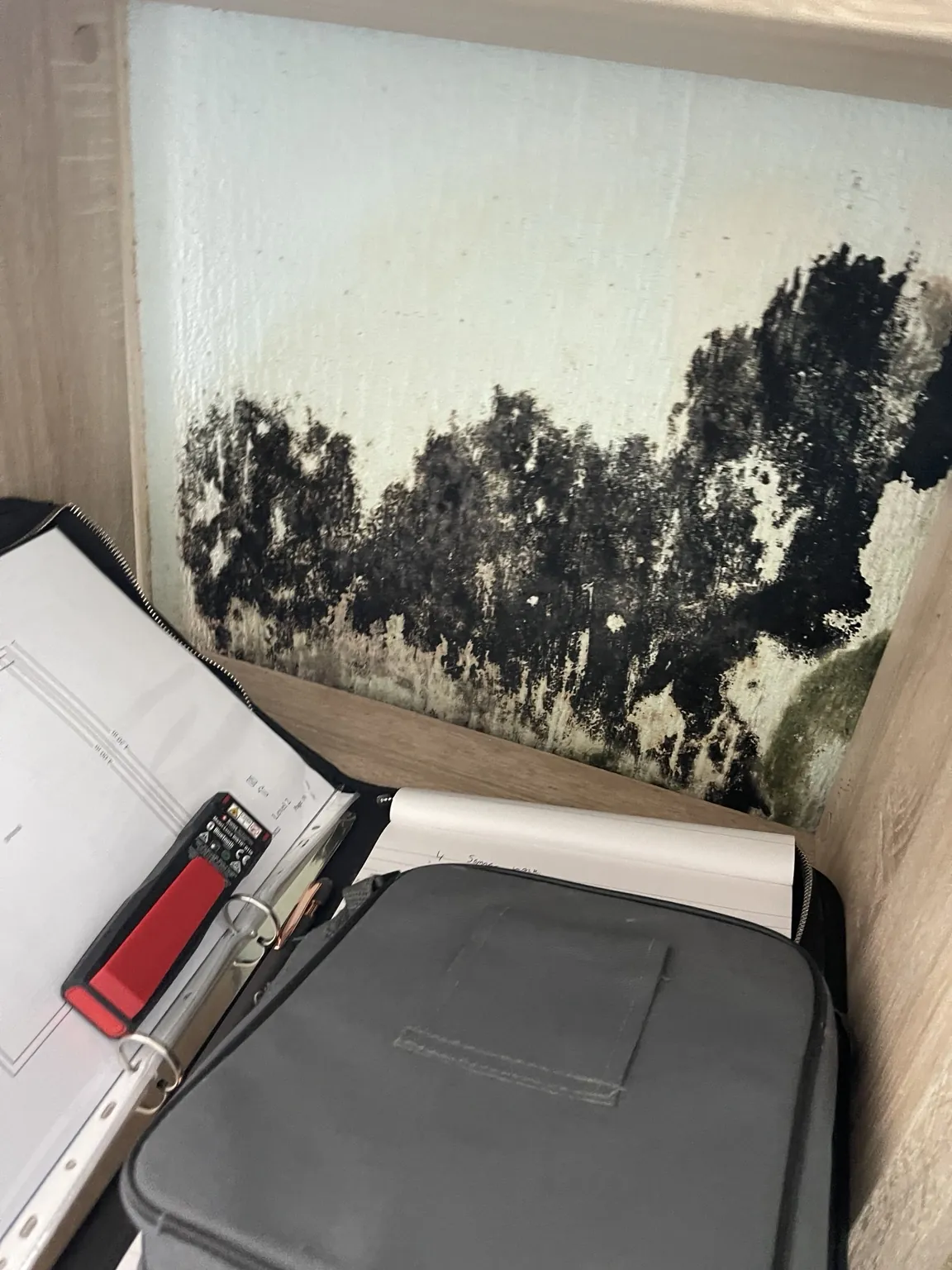
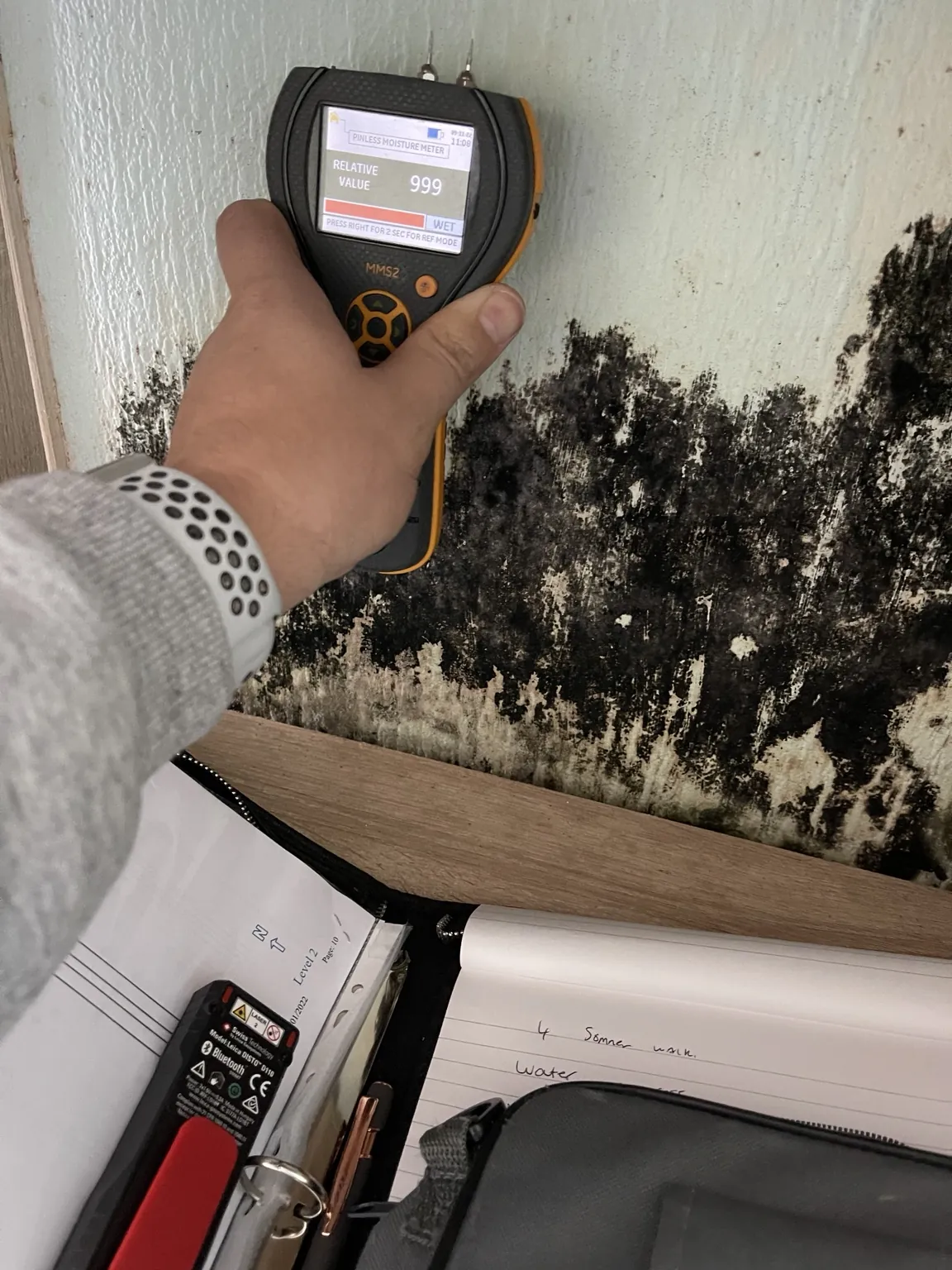
Moisture meters shown use a relative scale. A high reading is a prompt for further checks, not a moisture percentage or a stand-alone diagnosis.
Share the affected room, when the problem appears and any recent changes. A photo can help us understand what to ask next.
Send an enquiry using the form, or call 01634 567023.